Understand Lucky 9 before you play
Lucky 9 is a banker-versus-player race to nine. This GZone88 guide covers card values, third-card checks, common mistakes, and 21+ limits before you leave for a partner table.
Sponsored link to jiliphil.vip, a different gaming site. 21+ only.
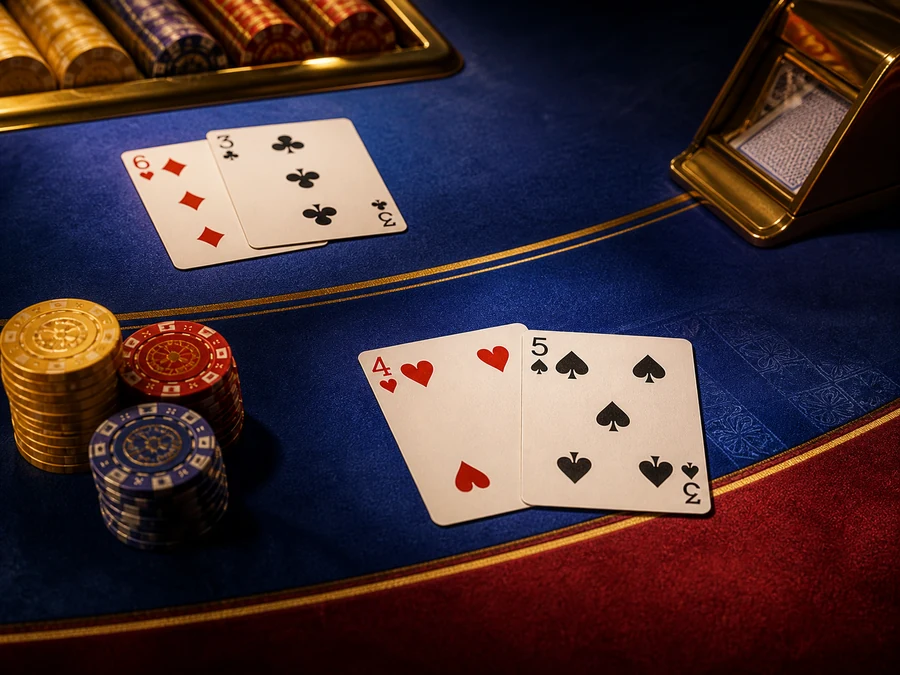
What Lucky 9 is for Filipino players
Lucky 9 is a fast, banked card game that shows up at barkada nights, family gatherings, and many Philippine digital lobbies. You play against the banker, not against the other seats at the table. The only score that matters is a hand total as close as possible to nine. Suits do not create flushes or straights, and there is no poker-style ranking.
Digital tables keep that same point race, but they freeze one exact dealing order, third-card rule, and payout sheet. Before you stake pesos, open the in-table help for the version you opened and confirm those three items.
Card values and the last-digit total
Use a standard 52-card deck. Ace counts as one. Cards two through nine keep face value. Tens, jacks, queens, and kings count as zero. Add the cards, then keep only the ones digit. A seven and a five total twelve and score two. An eight and an eight total sixteen and score six. Nine plus a king scores a natural nine.
| Card | Lucky 9 value | Beginner trap |
|---|---|---|
| Ace | 1 | Treating Ace as 11 like blackjack |
| 2–9 | Face value | None: this part is straightforward |
| 10, J, Q, K | 0 | Counting a 10 as ten points |
| Sum over 9 | Last digit only | Thinking 12 beats 8 |
That wrap rule is why a hand can look “big” and still lose. Memorise it before the first real-money round.
Banker role and round flow
One seat is the banker. Every other hand compares only to that banker hand. Players do not rank against each other. Casual tables rotate the banker by turn, by high-card draw, or by house agreement. Online software either assigns a house banker or rotates according to the product’s published rule.
- Place stakes against the banker before cards leave the shoe.
- Receive two cards; the banker receives two as well.
- Check for a natural nine on the first two cards.
- Apply the table’s third-card rule if no natural ends the hand.
- Compare each player total to the banker; settle win, lose, or push.
Common settlement is one-to-one on a win and a push on equal totals. Some digital rooms add optional side bets. Side bets have their own sheet and odds, separate from the core Lucky 9 comparison.
Third-card and house-rule checks
Unlike punto banco baccarat, many Lucky 9 home tables let each seat decide whether to hit a third card. Other rooms auto-draw under a fixed range. Casino-style Pinoy Lucky 9 products may force the dealer to hit on four or lower and stand on five or higher. Your phone lobby may follow any of those patterns.
- Confirm the maximum hand size (almost always three cards).
- Confirm whether hit is optional or automatic.
- Confirm whether the banker follows the same draw rule as players.
- Confirm tie behaviour (almost always a push).
- Confirm minimum and maximum stake before the first deal.
Availability on an external destination can differ by date, device, and location.
Mistakes Philippine players make
The most expensive beginner error is counting face cards as ten. The second is forgetting the last-digit wrap and celebrating a twelve as a strong hand. The third is importing baccarat third-card charts into a table that lets you choose. The fourth is raising the stake after a short losing streak because rounds feel “due.”
On mobile data, also check reconnection behaviour. If the app freezes mid-reveal, capture a non-sensitive event ID and status instead of mashing the bet button. Do not move a dispute into a random chat that asks for your one-time password.